
Apr 16-2026
UHPC Special Synthetic Fiber in Modern Concrete: Enhancing Crack Control, Ductility, and Long-Term Durability
READ MORE >

Bulk density does not determine the pozzolanic quality of silica fume, but it has a major influence on how the material is transported, stored, conveyed, metered, and introduced into concrete.
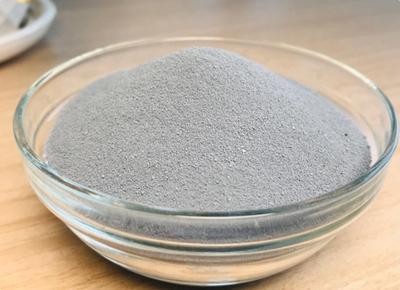
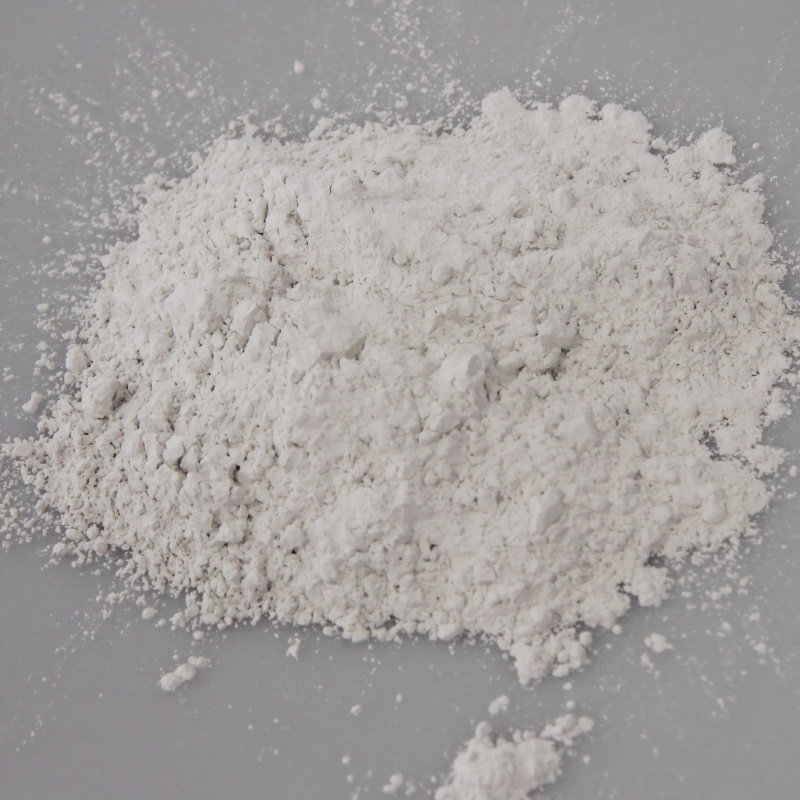
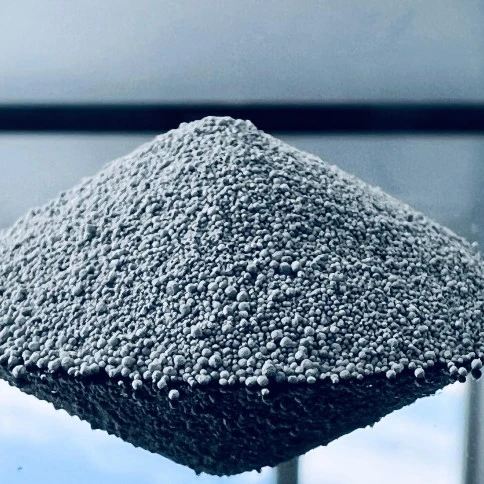
For most ready-mix and precast plants using bulk pneumatic systems, densified microsilica is generally easier to handle because more material can be stored in the same silo volume and its flow behavior is better suited to bulk transport. Undensified microsilica, by comparison, occupies considerably more volume and requires greater attention to dust control and material movement.
The correct choice therefore depends not only on concrete performance, but also on the plant's storage capacity, conveying equipment, mixer configuration, and required production rate.
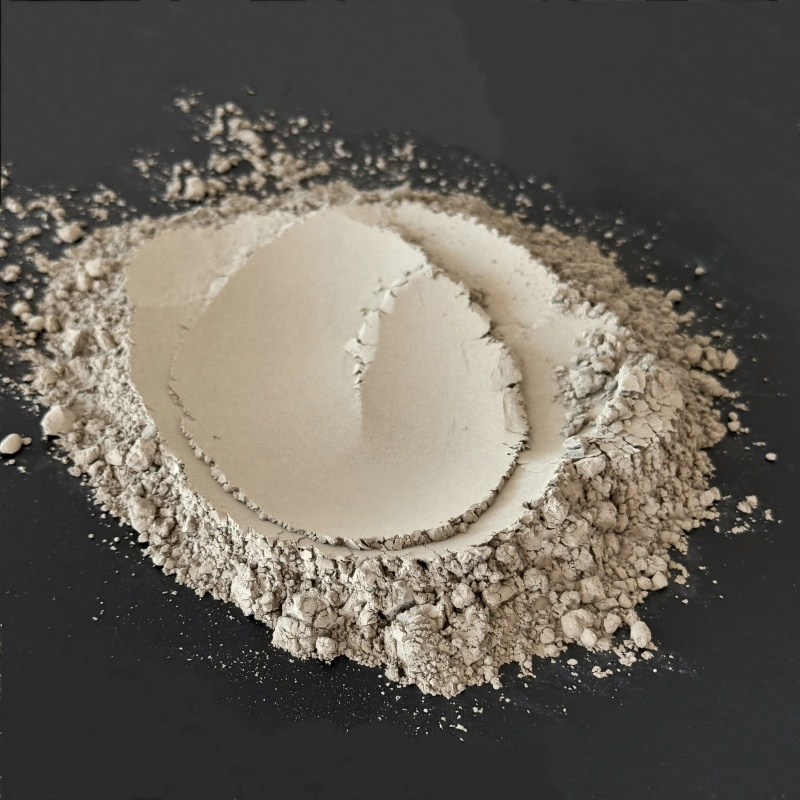
Bulk density describes how much silica fume occupies a given storage volume. This becomes especially important because silica fume is an extremely fine powder.
Typical commercial ranges vary by source and processing method. Tianjin Sunward, for example, supplies densified microsilica with a bulk density of approximately 500–700 kg/m³ and undensified material in the range of 150–450 kg/m³.
This difference changes the entire material-handling system.
| Handling Factor | Undensified Silica Fume | Densified Silica Fume |
| Bulk density | Lower | Higher |
| Storage volume required | Higher | Lower |
| Bulk transportation efficiency | Lower | Higher |
| Dust tendency | Higher | Lower |
| Pneumatic conveying | More demanding | Generally easier |
| Dispersion | Excellent | Requires sufficient mixing to break weak agglomerates |
| Common use | Specialized applications, refractories and selected concrete processes | Ready-mix, precast and general concrete production |
The performance difference is mainly operational. Industry guidance indicates that densification itself does not inherently reduce the effectiveness of silica fume in properly mixed concrete.
Yes. Higher bulk density allows substantially more silica fume to be stored in the same silo.
This matters for plants where silica fume is consumed continuously. A system designed around cement or fly ash handling may have limited spare silo volume, making low-density undensified silica fume less practical for bulk operation.

Storage planning should therefore be based on actual bulk density rather than product weight alone. Two silica fume products delivered at the same tonnage can require very different storage volumes.
Densified material also makes truck loading more economical. The Silica Fume Association notes that densified silica fume is commonly selected for bulk concrete use because it flows well pneumatically and enables more economical bulk transportation.
The challenge comes from its combination of extremely fine particles and low bulk density.
Undensified silica fume contains very light particles that can remain suspended easily during transfer. In poorly designed conveying systems, this may lead to excessive dusting, slower discharge, material accumulation, or unstable flow.
Pneumatic conveying systems handling silica fume therefore need to consider:
conveying air volume and pressure;
pipeline diameter and routing;
filtration capacity;
silo venting;
discharge equipment;
the actual density supplied.
These parameters should not simply be copied from a cement conveying system. Silica fume particles are significantly finer, and industry handling guidance notes that silica fume cannot normally be unloaded at the same rate as cement.
For high-throughput concrete plants, densified microsilica is usually the more practical form for pneumatic handling.
In many concrete plants, yes.
Dry densified silica fume can generally be stored and dispensed using systems similar to those used for other cementitious materials. However, "similar" does not mean that every cement silo configuration will work without adjustment.
The plant should still verify silo aeration, filter capacity, discharge geometry, weighing equipment, and conveying rate.
Moisture protection is also essential. Silica fume should remain dry during storage because water ingress can create agglomeration and interfere with consistent discharge and batching.
For a new installation, the micro silica supplier should provide the actual bulk-density range rather than only a nominal figure so that storage and feeding equipment can be sized correctly.
Concrete formulas normally dose silica fume by mass, not by loose volume. However, bulk density still affects the equipment responsible for delivering that mass.
A low-density powder occupies more space inside feeders, hoppers, screws, and weigh systems. If the equipment was designed for denser cementitious materials, an equivalent silica fume dose may require a longer filling cycle.
This can become important in high-output batching plants where each batch has a short production window.
Operators should therefore monitor more than the final target weight. Stable production also depends on:
consistent feeder discharge;
repeatable weighing time;
minimal material remaining in transfer lines;
reliable silo flow between batches.
Changes in silica fume source or density should be reviewed whenever a plant begins experiencing longer batching cycles or inconsistent feeder behavior.
Densification creates weak agglomerates of silica fume particles. These agglomerates are designed to separate during proper concrete mixing.
For conventional ready-mix and precast concrete containing coarse aggregate and adequate mixing energy, densified material is widely used successfully. Industry guidance nevertheless emphasizes that adequate mixing is necessary to break down the agglomerates.
This becomes more important in low-shear or specialized processes.
Applications such as certain dry-mix systems, mortars, or formulations without coarse aggregate may require closer evaluation. In some of these cases, undensified microsilica may provide a dispersion advantage.
The purchasing decision should therefore consider the mixer as well as the material specification.
For conventional bulk concrete production, densified silica fume is usually the more manageable option because it reduces storage-volume requirements and is better suited to pneumatic transportation.
Undensified material becomes attractive where rapid dispersion is particularly important or where the manufacturing process is designed specifically for low-density powder.
The best specification should be based on the complete production system:
For bulk ready-mix or precast plants: densified microsilica is generally preferred.
For specialized dry formulations or dispersion-sensitive applications: undensified silica fume may deserve consideration.
For existing plants: check silo volume, unloading system, feeder capacity, and mixer performance before changing product form.
Tianjin Sunward supplies both densified and undensified microsilica grades, allowing the product form to be matched to concrete, refractory, and other industrial processing requirements rather than selecting silica fume solely by SiO₂ content.
Silica fume bulk density is primarily a handling and production parameter, but its effect extends from freight efficiency all the way to concrete batching.
Densified silica fume reduces storage volume, supports more efficient bulk transportation, and generally integrates more easily into pneumatic conveying systems. Undensified silica fume requires more storage capacity and stricter dust management, but can be valuable where dispersion characteristics are especially important.
Before purchasing, confirm not only chemical specifications such as SiO₂ content, but also bulk density, packaging form, conveying compatibility, silo requirements, and mixer conditions. These factors often determine whether silica fume performs smoothly in day-to-day production.
Typical commercial values are often around 500–700 kg/m³, although the exact range depends on the supplier and densification process.
Undensified microsilica is silica fume that has not undergone densification. It has a lower bulk density and therefore occupies more storage volume.
Not necessarily in terms of concrete performance. Its main advantage is easier transportation, storage, and handling. Adequate mixing is required for proper dispersion.
Densified silica fume can commonly be stored in cementitious-material silos, provided the discharge, filtration, aeration, and weighing systems are suitable.
Its extremely fine particle size and low particle mass allow the powder to become airborne easily, particularly with undensified material.
Confirm the bulk-density range, SiO₂ grade, packaging, loading method, storage requirements, intended application, and compatibility with your conveying and batching system.