
Apr 16-2026
UHPC Special Synthetic Fiber in Modern Concrete: Enhancing Crack Control, Ductility, and Long-Term Durability
READ MORE >

For tunnel linings and shotcrete, fiber selection should start with the performance required after the concrete cracks.
Where the design requires residual load capacity, toughness, and energy absorption, steel fibers or structural macro synthetic fibers are normally the main options. Micro synthetic fibres serve a different purpose: they are primarily used for early-age crack control and, in selected tunnel specifications, resistance to explosive spalling during fire exposure.
A micro steel fiber can provide high-modulus reinforcement and strong crack-bridging capability, but its suitability for a tunnel or shotcrete design should be confirmed through the required residual strength or toughness test rather than fiber size or dosage alone.
This distinction is important because tunnel concrete is rarely selected simply on compressive strength. The real design question is how the lining behaves once cracking begins.
There is no single fiber type that is best for every tunnel.
The right choice depends on whether the shotcrete must provide structural ground support, control early shrinkage cracking, withstand aggressive groundwater, meet a fire design, or combine several of these functions.
| Fiber Type | Main Function in Tunnel Concrete | Key Advantage |
| Micro steel fiber | Crack bridging, toughness and mechanical reinforcement | High modulus and tensile strength |
| Macro synthetic fiber | Post-crack toughness and energy absorption | Corrosion resistance and low weight |
| Micro synthetic fiber | Early-age crack control and fire-spalling mitigation | Very fine three-dimensional distribution |
For sprayed concrete used as ground support, engineers should specify a required performance level rather than simply stating a fiber dosage.
Two fibers added at the same kg/m³ can produce very different residual strengths because geometry, tensile strength, anchorage, modulus, orientation, and bond with the cement matrix all affect crack-bridging performance.
Concrete itself performs well in compression but loses tensile load-carrying capacity rapidly after cracking. Fibers bridge those cracks and allow the material to continue carrying load while deformation develops.
This is particularly important in underground works, where shotcrete may experience local ground movement, convergence, vibration, impact, or changing rock pressure.
The purpose of fiber reinforcement is therefore not simply to prevent every crack. A well-designed fiber system helps control crack opening and preserves useful load capacity after cracking.
For tunnel shotcrete, engineers commonly evaluate properties such as:
residual flexural strength;
energy absorption;
toughness;
crack width control;
deformation capacity.
These values are more meaningful than fiber dosage alone when comparing alternative reinforcement systems.
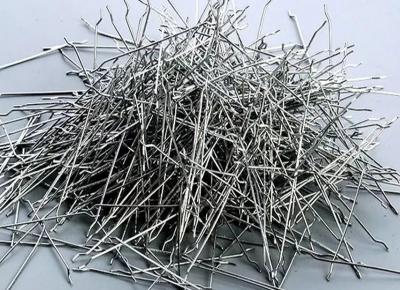
Micro steel fiber provides a high-modulus reinforcement mechanism that begins resisting crack development at relatively small crack widths.
Sunward's micro steel fibers are designed for good dispersion, high tensile performance, toughness, fatigue resistance, and crack control, with applications that include shotcrete, tunnels, and mining works.
Their relatively small dimensions can also be useful where reinforcement must be distributed through thinner sections or dense high-performance matrices.
However, an important distinction should be made between a micro steel fiber and the larger hooked or deformed steel macrofibers traditionally specified for structural fiber-reinforced shotcrete.
Fiber length alone does not determine structural performance. A smaller steel fiber may provide excellent microcrack control and matrix reinforcement, but the final tunnel design still needs sufficient post-crack load transfer at the crack widths relevant to the support system.
For this reason, a project considering micro steel fiber should verify the actual concrete or shotcrete mix through the specified flexural or panel test.
It can be considered where a project needs high stiffness, impact resistance, fatigue performance, or reinforcement of a dense cementitious matrix.
It may also be useful in repair shotcrete, specialized tunnel elements, high-performance concrete, and applications where controlling smaller crack development is important.
The fiber geometry, dosage, aggregate grading, pump configuration, and spray equipment must all be considered together.
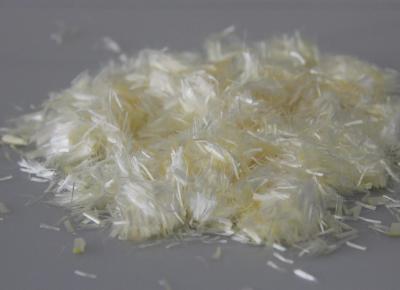
Macro synthetic fiber reinforcement uses relatively large polymer fibers, commonly polypropylene or polyolefin-based materials, to bridge cracks after the concrete matrix has cracked.
Unlike micro synthetic fibres, structural macrofibers are designed to contribute meaningful post-crack toughness.
In tunnel applications, macro synthetic fiber reinforced concrete has become particularly attractive where corrosion resistance and easier material handling are priorities.
Sunward's macro synthetic fiber range, for example, is designed for applications including shotcrete, tunnel linings, mining, precast concrete, and structural rehabilitation.
Because the fibers are significantly lighter than steel, the required dosage by mass is also much lower than conventional steel fiber dosages. This should not be interpreted as weaker reinforcement: steel and polymer fibers have very different densities, geometries, and mechanical properties, so kg/m³ cannot be compared directly.
They can in some projects, but replacement should be performance-based rather than weight-for-weight.
A properly designed macro fiber reinforced concrete system can provide the residual strength, toughness, and energy absorption required for many tunnel and mining applications.
The engineering specification should define the required performance, and candidate fiber systems should then be tested against that requirement.
Research on tunnel segments has shown that synthetic macrofibers can achieve design performance comparable with steel-fiber systems when dosage is calibrated to the required residual flexural response.
This does not mean that a universal conversion ratio exists.
Switching from steel to macro synthetic fibers may require adjustment of:
fiber dosage;
mix rheology;
batching sequence;
pumping conditions;
accelerator compatibility;
spraying parameters.
The decision should therefore be based on tested concrete performance and site conditions rather than a simple fiber-cost comparison.
Macro synthetic fiber reinforced concrete is especially useful where long-term exposure makes corrosion a concern.
Tunnel linings can be exposed to groundwater, chlorides, sulfates, or persistently humid conditions. Synthetic fibers do not rust, which eliminates the risk of corrosion-related staining or deterioration of exposed fibers.
Their lower weight can also simplify transportation, dosing, and handling underground.
For shotcrete contractors, another practical consideration is equipment wear. Steel fiber systems can be more abrasive to pumps, hoses, and spraying equipment, while synthetic macrofibers may offer easier handling when the mix and equipment are properly configured.
This makes macro synthetic systems worth considering for:
Permanent tunnel linings where corrosion resistance matters.
Mining ground support requiring high deformation capacity and energy absorption.
Wet-mix shotcrete where pumping and operator handling are important.
Aggressive environments where exposed steel fibers could create durability concerns.
The final decision must still meet the structural specification.
Micro synthetic fibres are primarily crack-control and durability fibers rather than structural post-crack reinforcement.
Their small diameter allows a very large number of fibers to distribute throughout the cement paste. This helps control plastic shrinkage cracking while the concrete is still young.
In tunnel construction, polypropylene microfibers may also be specified as part of a fire-resistance strategy.
During severe heating, polypropylene fibers can melt and create pathways that allow vapor pressure to dissipate. This can reduce the risk of explosive concrete spalling in appropriately designed tunnel concrete.
That does not make micro synthetic fibres interchangeable with macro synthetic fibers.
A useful way to distinguish them is:
Macro synthetic fibers manage larger cracks after cracking and contribute to toughness.
Micro synthetic fibers act mainly at the microcrack, early-age, or fire-performance level.
Many tunnel systems therefore use both rather than choosing one or the other.
Yes. Hybrid fiber systems can be effective when the project has more than one performance requirement.
For example, a tunnel shotcrete mix may use macro synthetic fibers to provide post-crack energy absorption while micro synthetic fibres are included for plastic shrinkage control or fire-spalling resistance.
The two fibers perform different jobs.
A hybrid system should still be trialed carefully because increasing total fiber content can influence workability, pumpability, accelerator response, and nozzle behavior.
Adding more fiber does not automatically improve shotcrete. Poor dispersion or unsuitable rheology can reduce placement quality and create fiber balls, inconsistent spraying, or higher rebound.
Fiber type can influence rebound, but rebound is not controlled by the fiber alone.
Aggregate grading, water-binder ratio, accelerator dosage, nozzle distance, spray angle, air pressure, operator technique, and substrate condition are all important.
Because macro synthetic fibers are lighter than steel fibers, they can offer practical advantages in some spraying systems. Sunward's macro synthetic fiber is specifically designed for easy dispersion, reduced equipment wear, and shotcrete applications.
Nevertheless, a new fiber should be evaluated under actual spray conditions.
A laboratory mix with good mechanical results may still require adjustment before it can be pumped and sprayed efficiently underground.
Start with the required function, not the material name.
If the primary requirement is structural toughness and residual strength, evaluate micro steel or suitable steel reinforcement and structural macro synthetic fibers against the specified post-crack performance.
If the main concern is corrosion resistance combined with structural toughness, macro synthetic fiber reinforcement becomes particularly attractive.
If the project needs plastic shrinkage control or fire-spalling resistance, micro synthetic fibres should be considered, usually alongside rather than instead of structural reinforcement.
For procurement, the specification should go beyond fiber length and tensile strength. Request technical information on fiber geometry, material, tensile properties, recommended dosage, dispersion, applicable standards, and test data from representative concrete or shotcrete mixes.
Whenever possible, qualification should be based on the required performance of the finished fiber-reinforced concrete rather than a generic dosage.
Tianjin Sunward supplies a range of concrete reinforcement fibers including micro steel fiber, macro synthetic fiber, and micro synthetic fiber, allowing engineers and concrete producers to select reinforcement according to the required function of the mix.
For tunnel and shotcrete projects, fiber selection can be reviewed against the intended application, concrete mix, pumping system, exposure environment, required toughness, and project testing method.
This approach is more reliable than treating every fiber as a direct substitute for welded mesh or assuming that a higher dosage automatically produces better tunnel support.
Tunnel and shotcrete reinforcement should be selected according to the behavior required after cracking.
Micro steel fiber provides high-modulus crack bridging and can improve toughness and fatigue performance. Macro synthetic fiber reinforcement is a strong option where structural toughness, low weight, and corrosion resistance are important. Micro synthetic fibres serve a different role, particularly in early-age crack control and fire-spalling mitigation.
For many projects, the final solution may involve one structural fiber or a hybrid fiber system.
The key is to specify the required residual strength, toughness, energy absorption, and durability performance first, then qualify the fiber and dosage through representative testing.
Yes. Structural macro synthetic fibers are widely used where the specified residual strength and toughness requirements can be demonstrated.
In some engineered shotcrete systems they can reduce or replace conventional mesh, but this must be supported by structural design and performance testing.
Macro synthetic fibers provide post-crack toughness. Micro synthetic fibers mainly control early-age cracking and may improve fire-spalling resistance.
Yes, it can be used in shotcrete and tunnel applications, but the required dosage and structural role should be confirmed through project-specific testing.
Macro synthetic fibers offer an advantage because polymer fibers do not corrode. Other structural and fire requirements must still be satisfied.
Yes. Hybrid systems can combine different crack-control and toughness functions, provided workability, pumping, spraying, and final mechanical performance are verified.