Apr 07-2026
GBFS vs Fly Ash Which Is Better?
READ MORE >

In modern construction, the focus has shifted from simply achieving strength to delivering long-term durability, sustainability, and lifecycle performance. Silica fume plays a critical role in this transition—not as a basic additive, but as a high-impact material used strategically in demanding engineering scenarios.
This article focuses specifically on how silica fume is used in real-world applications, helping engineers, contractors, and material specialists make informed decisions.
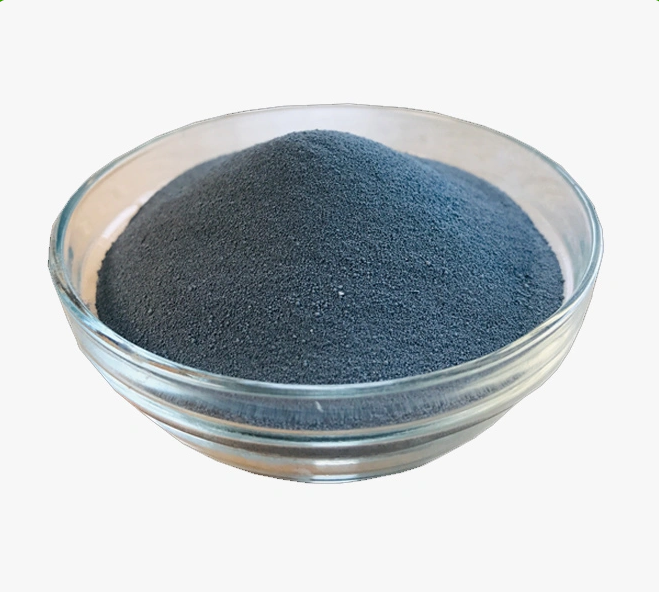
Rather than serving as a general-purpose material, silica fume is typically selected when concrete must meet strict performance requirements, such as:
· Extremely low permeability
· High compressive strength
· Resistance to aggressive environments
· Long service life with minimal maintenance
According to the American Concrete Institute, silica fume is widely used in high-performance concrete systems where durability is as critical as strength.
One of the most common uses of silica fume is in high-rise construction, where structural efficiency and load-bearing capacity are essential.
· Enables compressive strengths exceeding 80–100 MPa
· Reduces column size, increasing usable floor space
· Improves pumpability for high-elevation placement
The Council on Tall Buildings and Urban Habitat highlights that high-strength concrete is essential for optimizing structural systems in skyscrapers.
Concrete structures exposed to seawater face continuous chloride attack, which can lead to steel reinforcement corrosion.
· Ports and harbors
· Offshore platforms
· Coastal bridges
Silica fume is used here because it significantly reduces permeability. The U.S. Bureau of Reclamation notes that lowering chloride ingress is one of the most effective ways to extend service life in marine environments.
Bridge decks are particularly vulnerable due to:
· De-icing salts
· Freeze-thaw cycles
· Heavy traffic loads
Silica fume improves durability by:
· Reducing water penetration
· Increasing abrasion resistance
· Enhancing bond strength with reinforcement
The Federal Highway Administration reports that silica fume concrete can significantly extend bridge service life and reduce maintenance costs.
Silica fume is widely used in shotcrete due to its ability to improve cohesion and reduce rebound.
· Tunnel linings
· Mining operations
· Slope stabilization
According to the International Tunneling Association, silica fume improves shotcrete adhesion and reduces material waste during application.
In industrial environments, floors must withstand:
· Heavy machinery
· Constant traffic
· Abrasive materials
Silica fume is used to:
· Increase surface density
· Improve wear resistance
· Reduce dusting
This makes it suitable for warehouses, logistics centers, and manufacturing plants.
Silica fume is a key component in UHPC, where performance requirements go beyond conventional limits.
· Compressive strength > 150 MPa
· Extremely low permeability
· Exceptional durability
The Federal Highway Administration has documented UHPC applications in bridge connections and precast elements across the United States. For architectural precast panels and premium structural elements that demand both structural resilience and a pristine, bright aesthetic, manufacturers typically specify white silica fume to prevent the darkening effect associated with standard mineral admixtures.
Using silica fume effectively requires careful mix design adjustments:
Due to its fine particles, silica fume increases water demand. Engineers typically use superplasticizers to maintain flowability.
· 5–10%: Standard durability improvement
· 10–15%: High-performance applications
In advanced applications, contractors may prefer undensified silica fume because it offers:
· Better dispersion
· Faster reactivity
· More uniform performance
This is particularly important in precast and UHPC systems.
Silica fume is rarely used alone. It is often combined with:
· Fly ash (for cost efficiency)
· GGBS (for sustainability and durability)
· Chemical admixtures (for workability and setting control)
This multi-material approach allows engineers to tailor performance for specific project needs.
Silica fume contributes to sustainability by:
· Reducing cement consumption
· Lowering CO₂ emissions
· Extending service life of structures
The International Energy Agency states that cement production accounts for 7–8% of global CO₂ emissions, making supplementary materials essential for decarbonization.
Even though silica fume is highly effective, improper use can reduce its benefits.
Excessive dosage can lead to shrinkage and cracking
Silica fume concrete requires proper curing to prevent surface defects
Failure to adjust admixtures can result in difficult placement
Silica fume is not just a performance enhancer—it is a strategic material used in critical applications where durability, strength, and long-term reliability matter most. From high-rise buildings to marine infrastructure and UHPC systems, its role continues to expand as construction demands evolve.