Mar 27-2026
How to Calculate SCMs Replacement Ratio in Concrete?
READ MORE >

For most concrete producers, GGBS is the stronger choice when durability, lower heat generation, chloride resistance and long-term performance are priorities, while fly ash is particularly attractive when improved workability and economical cement replacement are the main objectives.
The final decision should not be based on price per tonne alone. Early-strength requirements, exposure conditions, curing temperature, SCM consistency and the required replacement level all affect which material delivers the lowest total concrete cost.
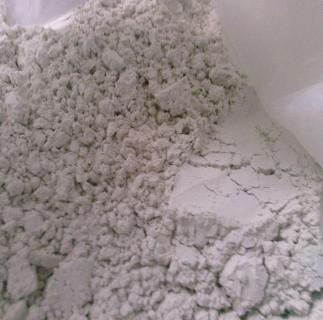
GGBS—also called GGBFS or slag cement—is produced by grinding granulated blast-furnace slag from iron production. Fly ash is collected from the combustion of pulverized coal.
Their behavior in cementitious systems is different. GGBS has latent hydraulic properties, while fly ash primarily contributes through pozzolanic reactions with calcium hydroxide produced during cement hydration.
From a practical mix-design perspective:
| Property | GGBS | Fly Ash |
| Early strength | Moderate to slower | Usually slower |
| Long-term strength | Excellent | Good to excellent |
| Workability | Improved | Excellent |
| Heat reduction | Very good | Very good |
| Chloride resistance | Excellent | Good |
| Sulfate resistance | Very good | Good to very good |
| Typical replacement potential | Medium to high | Low to medium |
| Best suited to | Marine, foundations, mass concrete, durable structural concrete | Ready-mix, general structural concrete, mass concrete |
GGBS replacement levels of around 20–80% are used depending on specification and performance requirements, with approximately 50% being a common combination with Portland cement. Fly ash is commonly used at approximately 15–30% replacement in conventional concrete, although higher levels may be selected for mass placements.
Both materials can reduce early-age strength compared with straight Portland cement, particularly at high replacement levels or low curing temperatures.
GGBS, however, can continue developing strength significantly beyond 28 days. Industry guidance indicates that concrete containing up to about 50% GGBS can normally achieve similar 28-day strength to equivalent Portland cement concrete when total cementitious content is unchanged.
Fly ash also contributes strongly to later-age strength because its pozzolanic reaction produces additional cementitious compounds. The FHWA notes that fly ash concrete generally gains strength more slowly initially but can continue gaining strength over longer periods.
For buyers evaluating concrete GGBS performance, the important question is therefore not simply "Which SCM gives higher strength?" It is:
At what age must the concrete reach the specified strength?
For precast production or fast formwork cycling, early strength may limit the GGBS percentage. For foundations, underground structures and infrastructure designed around 28-, 56- or 90-day performance, higher GGBS levels become much more attractive.
For severe exposure environments, GGBS is often preferred because it can substantially reduce permeability and improve resistance to chloride ingress when correctly proportioned. This is especially valuable in marine structures, foundations, wastewater infrastructure and reinforced concrete exposed to chlorides or sulfates.
Fly ash also reduces permeability and can improve resistance to sulfate attack, alkali-silica reaction and reinforcement corrosion.
Fly ash has a notable advantage in fresh-concrete rheology. Its relatively spherical particles can reduce water demand and improve pumpability and finishing characteristics.
GGBS also generally maintains or improves consistence and can make concrete easier to pump, place and compact.
Both SCMs are suitable for controlling temperature rise. GGBS slows the rate of hydration and can significantly reduce peak concrete temperatures as its replacement percentage increases. Fly ash similarly reduces heat generation and is widely used for mass concrete applications.
For thick foundations and other large pours, material selection should therefore be based on thermal modelling and trial mixes rather than SCM type alone.
Ready-mix concrete: GGBS is well suited when contractors need improved durability, good pumpability, longer workability retention and lower clinker content. Around 30–50% replacement is often a practical starting point before optimizing the mix against local cement, aggregates and admixtures.
Precast concrete: GGBS can provide excellent surface appearance and long-term durability, but replacement levels must be balanced against demoulding and production-cycle requirements. Where very high one-day strength is essential, lower GGBS contents or an optimized curing system may be necessary.
Mass concrete: This is one of the strongest applications for GGBS. Higher replacement levels can reduce peak temperature and thermal gradients, helping engineers manage the risk of thermal cracking in raft foundations, dams, thick walls and other large sections.
For commercial procurement, consistency is equally important. Buyers should compare not only GGBFS price but also fineness, chemical composition, glass content, moisture, certification and batch-to-batch consistency. A cheaper SCM that forces frequent admixture or mix-design adjustments can quickly become the more expensive option. For buyers sourcing GGBS for ready-mix, precast or mass concrete applications, Tianjin Sunward supplies GGBFS solutions with a focus on consistent material quality and project-specific procurement requirements.
Neither is universally better. GGBS is usually preferred for high replacement levels, chloride resistance, mass concrete and long-term durability. Fly ash is particularly effective for improving workability and reducing water demand. Local material quality and project specifications should determine the final choice.
There is no single optimum percentage. GGBS contents between 20% and 80% are used commercially, while around 50% GGBS with 50% Portland cement is a common combination. Higher percentages should be validated against early-strength, setting-time and curing requirements.
It can improve later-age strength, but strength development is generally slower at early ages. The effect depends on GGBS quality, replacement percentage, cement chemistry, water-binder ratio and curing conditions.
Yes. GGBS and fly ash can be incorporated in ternary binder systems with Portland cement. This approach allows concrete producers to balance heat reduction, workability, durability, strength development and clinker reduction. Blended and ternary cementitious systems are recognized approaches to reducing clinker content while achieving required concrete performance.