Aug 19-2026
GGBS vs Fly Ash in Concrete: Which Supplementary Cementitious Material Should You Choose?
READ MORE >

Neither form is universally better. Undensified silica fume is generally preferred when rapid and uniform particle dispersion is critical, while densified microsilica is usually more practical for large-scale concrete production because it is easier to transport, store, and batch.
For ready-mix and many precast plants with adequate mixing energy, densified material offers an excellent balance between concrete performance and operating efficiency. For very low water-to-binder mixes, specialty mortars, or processes where breaking down agglomerates is difficult, undensified microsilica can provide a dispersion advantage. Research on ultra-high-performance concrete also shows that densified silica fume can achieve very high strength when sufficient mixing and dispersion are provided.
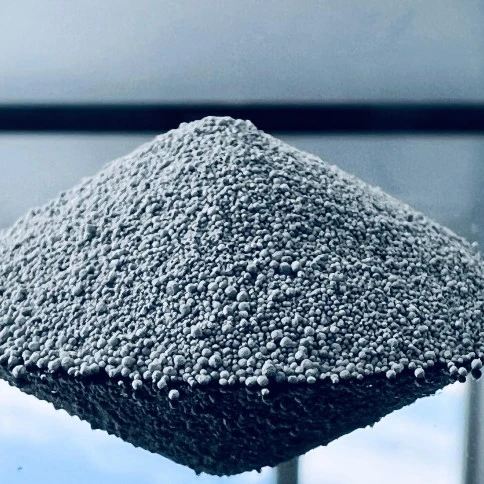
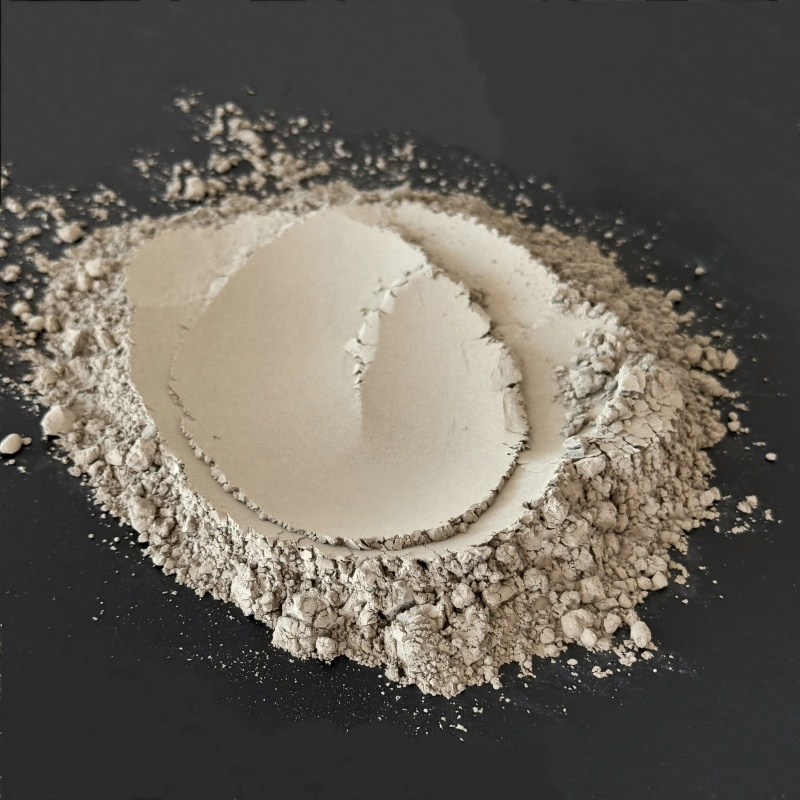
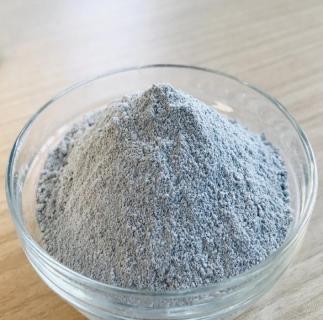
The main difference is physical form rather than chemical composition. Undensified silica fume is collected in a relatively loose, low-bulk-density condition. Densification brings the extremely fine silica fume particles together into larger, relatively weak agglomerates, increasing the amount of material that can be stored or transported within the same volume.
Typical undensified microsilica bulk density can be roughly 150–450 kg/m³, depending on grade and production conditions. Tianjin Sunward lists its undensified microsilica products within this range. Densified products commonly reach approximately 500–700 kg/m³.
The practical result is simple: undensified material favors dispersion, while densified material favors logistics.
| Factor | Undensified Silica Fume | Densified Microsilica |
| Bulk density | Lower | Higher |
| Dispersion | Generally easier | Requires sufficient mixing |
| Dust generation | Higher | Lower |
| Transport efficiency | Lower | Higher |
| Silo/storage efficiency | Lower | Higher |
| Best fit | Specialty or dispersion-sensitive systems | Commercial concrete production |
The most important technical consideration is agglomerate breakup. Densified silica fume must be sufficiently dispersed during concrete mixing. The Silica Fume Association notes that inadequate laboratory mixing may leave densified agglomerates and recommends appropriate mixing procedures where necessary.
This does not mean densified silica fume produces inferior concrete. With suitable mixers, mixing time, water reducers, and mix sequencing, densified material can perform extremely well.
For most commercial high-performance concrete, densified microsilica is often the more practical choice because plants can handle larger quantities efficiently while still achieving high strength and low permeability.
However, undensified silica fume may be advantageous when dispersion is the limiting factor, particularly in extremely low water-binder ratio formulations or systems with limited shear.
A published UHPFRC comparison found an expected dispersion advantage for undensified silica fume, but also demonstrated that densified silica fume could produce concrete with strength around 200 MPa when properly incorporated.
Therefore, purchasing decisions should not be based on bulk density alone. SiO₂ content, consistency, loss on ignition, mixer capability, admixture compatibility, and required concrete performance should all be evaluated.
Ready-mix concrete: Densified microsilica is usually preferred. Its higher bulk density improves bulk transport, pneumatic handling, silo storage, and automated batching.
Precast and UHPC: Either form can work. High-shear precast mixers can effectively use densified grades, while undensified microsilica can be attractive when maximum dispersion in very low-water formulations is the priority.
Dry-mix mortars and specialty products: Evaluate the final mixing method carefully. Where jobsite mixing provides limited shear, easily dispersible undensified material may offer advantages. Where dust control, packaging efficiency, and automated production are more important, densified material can be more convenient.
Tianjin Sunward supplies both densified and undensified microsilica grades, allowing the product form to be matched to the customer's formulation and production process rather than applying one solution to every concrete application.
Generally, no. Densification primarily changes the physical arrangement and bulk density of the particles. The performance difference is therefore strongly related to handling and dispersion rather than a fundamentally different silica chemistry.
It has not been intentionally densified into larger agglomerates. This can make undensified silica fume easier to distribute through the cementitious system, especially where mixing energy is limited.
Yes. Properly dispersed densified microsilica can be successfully used in UHPC and UHPFRC, including extremely high-strength formulations.
Choose densified microsilica when efficient transportation, silo storage, dust reduction, and large-volume batching are priorities. Choose undensified microsilica when dispersion performance or a specialized formulation is the primary concern.
For a reliable selection, the best approach is to compare your required concrete performance, mixer type, dosage system, packaging requirements, and target SiO₂ grade before ordering.