Aug 06-2025
Advantages of Microsilica's Multi-Field Applications
READ MORE >

In modern concrete engineering, fly ash is no longer treated as a single material. Instead, its classification increasingly depends on performance characteristics, processing methods, and application scenarios, similar to how advanced materials like microsilica are categorized into different product forms.
By understanding fly ash from a functional and product-based perspective, engineers can make more accurate decisions in mix design, durability optimization, and cost control.
This guide explores the main types of fly ash used in concrete, drawing practical parallels with advanced cementitious materials to provide a more application-oriented understanding.
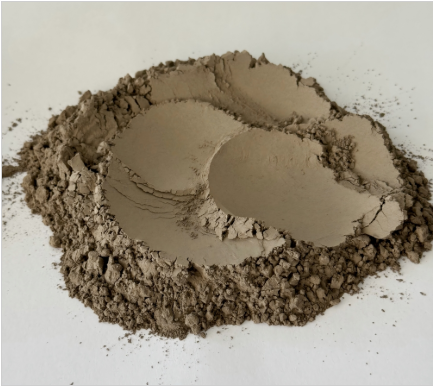
Traditionally, fly ash is divided into:
· Class F (low calcium)
· Class C (high calcium)
However, in real engineering practice, this classification is often not enough.
Instead, fly ash is increasingly selected based on:
· Particle form (processed vs raw)
· Fineness and dispersion
· Application-specific performance
This approach is similar to how microsilica products are categorized into densified, undensified, and high-purity variants, each serving different engineering needs.
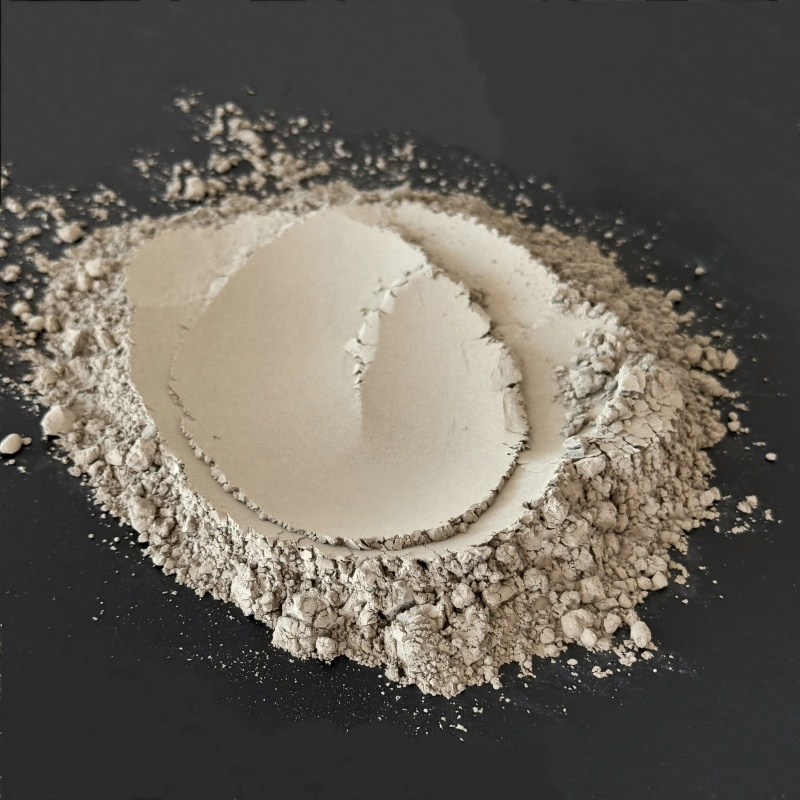
The most commonly used type in concrete is processed fly ash, often supplied as fly ash powder with controlled fineness and stable quality.
· Consistent particle size distribution
· Improved handling and transportation
· Stable performance in batching systems
This type is functionally similar to densified microsilica, which is widely used in concrete due to its good cost-performance balance and ease of handling.
· Ready-mix concrete
· General structural construction
· Infrastructure projects
· Improves workability due to spherical particles
· Reduces water demand
· Enhances long-term strength
This category includes fly ash that has been further processed to improve fineness or remove impurities.
· Higher surface area
· Increased pozzolanic reactivity
· Lower carbon content
This is comparable to undensified microsilica, which offers better dispersion and higher reactivity due to its lower bulk density and finer structure.
· High-performance concrete (HPC)
· Precast elements
· Durable infrastructure
· Faster strength development
· Reduced permeability
· Improved microstructure
High-calcium fly ash (similar to ASTM Class C) behaves differently from traditional pozzolanic materials.
· Contains reactive calcium compounds
· Exhibits self-cementing properties
· Faster hydration reaction
· Cold-weather construction
· Rapid construction projects
· Soil stabilization
Unlike low-calcium fly ash, this type can contribute directly to early strength, reducing dependence on cement hydration.
In advanced applications, fly ash may be selected based on purity and performance consistency.
· Low impurity content
· Controlled chemical composition
· Enhanced durability performance
This aligns with the concept of white microsilica, which offers high purity, fine particle size, and improved fluidity for specialized applications such as high-end concrete and advanced materials.
· Ultra-high performance concrete (UHPC)
· Architectural concrete
· Specialized precast systems
· Spherical particles improve flow
· Fine particles enhance cohesion
· High-reactivity fly ash → faster strength gain
· Standard fly ash → better long-term strength
· Reduced permeability
· Improved resistance to chemical attack
· Enhanced resistance to chloride ingress
These effects are similar to those observed in microsilica-enhanced systems, where fine particles fill voids and densify the matrix.
· Cost efficiency is important
· General construction applications
· No extreme durability requirements
· High strength is required
· Reduced permeability is critical
· Used in infrastructure or marine environments
· Early strength is needed
· Fast construction cycles
· Cold weather conditions
· Performance consistency is critical
· Used in UHPC or precast systems
· Aesthetic or architectural requirements exist
Fly ash is often used together with:
· Silica fume (for strength and density)
· GGBS (for durability and sustainability)
· Chemical admixtures (for workability control)
This multi-material strategy allows engineers to optimize both performance and cost.
Ignoring differences in fineness and chemistry leads to inconsistent performance
Unprocessed fly ash may contain excess carbon or impurities
Different projects require different performance priorities
Instead of simple chemical categories, fly ash will increasingly be classified by:
· Reactivity
· Fineness
· Functional performance
Fly ash will continue to be used alongside:
· Microsilica
· Slag
· Nano-materials
to create high-performance and low-carbon concrete systems.
Understanding the different types of fly ash from a performance and application perspective allows for more precise material selection in modern concrete. By aligning fly ash type with project requirements, engineers can achieve better strength, durability, and sustainability in construction.