Jan 19-2026
Granulated Blast Furnace Slag (GBFS): Properties, Applications, and Benefits in Construction
READ MORE >

Ultra-High Performance Concrete (UHPC) has transformed modern structural engineering by enabling extremely high strength, exceptional durability, and long service life. However, one of the key challenges in UHPC design is controlling micro-cracking behavior under load, shrinkage, and environmental stress.
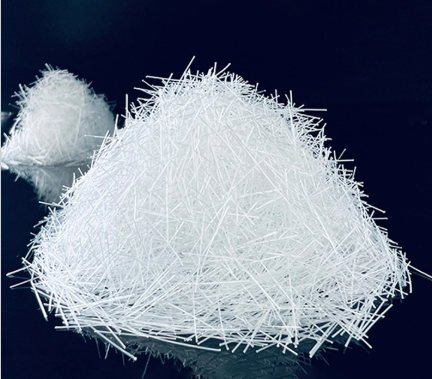
This is where UHPC Special Synthetic Fiber plays a critical role. It is not simply an additive—it is a functional reinforcement system that directly influences crack resistance and post-cracking performance.
This article explores the practical engineering value of UHPC fibers, their working mechanism, and how they are applied in real construction systems.
UHPC achieves compressive strengths far beyond conventional concrete, often exceeding 150 MPa. However, as strength increases, the material becomes more brittle unless reinforced properly.
According to the Federal Highway Administration, fiber reinforcement is a key factor in improving tensile behavior and ductility in UHPC systems used in bridge and infrastructure applications.
UHPC fibers help address:
· Early-age plastic shrinkage cracking
· Long-term drying shrinkage
· Load-induced microcrack propagation
· Impact and fatigue resistance
Without fiber reinforcement, UHPC would behave as a high-strength but brittle material.
UHPC synthetic fibers function through a crack-bridging mechanism.
When microcracks form:
· Fibers bridge across crack surfaces
· Stress is redistributed
· Crack propagation slows or stops
This mechanism improves:
· Post-cracking tensile strength
· Energy absorption capacity
· Structural ductility
Unlike steel fibers, synthetic fibers are lightweight, corrosion-resistant, and easier to disperse in mix systems, making them suitable for complex UHPC formulations.
Fibers reduce both plastic shrinkage cracks and structural cracks.
UHPC becomes less brittle and can sustain deformation after cracking.
Reduced crack width directly limits:
· Water ingress
· Chloride penetration
· Freeze-thaw damage
The American Concrete Institute highlights fiber reinforcement as a key method for improving long-term durability in high-performance cementitious composites.
UHPC fibers are widely used in:
· Bridge joint connections
· Deck overlays
· Prefabricated bridge elements
The high tensile performance improves fatigue resistance under repeated traffic loads.
In precast systems, fibers improve:
· Handling strength during demolding
· Edge durability
· Resistance to transport damage
UHPC allows for very thin structural sections, but fibers are essential to maintain integrity under bending stress.
UHPC with fibers is increasingly used in:
· Structural retrofitting
· Column strengthening
· Infrastructure rehabilitation
Proper fiber dosage is critical for performance balance.
Typical considerations include:
· Fiber volume fraction optimization
· Workability control
· Dispersion uniformity
UHPC mixes often require high-range water reducers or compatible admixtures to maintain flowability.
In many cases, fibers are used alongside a chemical admixture for concrete to ensure proper rheology and mixing performance in ultra-low water-to-binder systems.
| Feature | UHPC Synthetic Fiber | Steel Fiber | No Fiber |
| Crack Control | Excellent | Good | Poor |
| Corrosion Resistance | Excellent | Moderate | N/A |
| Workability | High | Medium | High |
| Durability | Very High | High | Low |
Synthetic fibers are especially preferred in environments where corrosion risk is high or weight reduction is important.
UHPC performance depends on the compatibility between cement matrix, admixtures, and fibers.
Key factors include:
· Fiber dispersion stability
· Bond strength between fiber and matrix
· Workability retention time
· Rheology control
In industrial practice, UHPC fiber systems are often supplied by specialized concrete admixture suppliers who ensure consistency across batches and compatibility with high-performance cementitious systems.
Improper mixing can lead to fiber agglomeration.
Solution:
· Controlled mixing sequence
· Gradual fiber addition
Fibers can increase mix viscosity.
Solution:
· Adjust superplasticizer dosage
· Optimize water-to-binder ratio
Uniform distribution is critical for performance.
Solution:
· Use high-shear mixing equipment
UHPC with synthetic fibers contributes to sustainability by:
· Extending structural service life
· Reducing maintenance frequency
· Lowering material consumption through thinner sections
The International Energy Agency notes that reducing lifecycle maintenance in infrastructure is a key strategy for lowering embodied carbon impact in construction systems.
Combining:
· Synthetic fibers
· Steel fibers
· Microfibers
to optimize both ductility and strength.
Research is exploring fibers with sensing capabilities for:
· Crack detection
· Structural health monitoring
Digital batching systems are improving:
· Fiber dispersion accuracy
· Mix consistency
· Quality control
Choose UHPC synthetic fiber when:
· Crack control is critical
· Corrosion resistance is required
· Lightweight reinforcement is preferred
· UHPC thin-section design is used
UHPC Special Synthetic Fiber is a key component in modern ultra-high performance concrete systems. It significantly improves crack resistance, ductility, and durability while enabling advanced structural designs. When combined with optimized mix design and compatible admixtures, it helps UHPC achieve its full engineering potential in both infrastructure and architectural applications.