Mar 28-2025
How Can Microsilica Powder Improve Your Building Design?
READ MORE >

In today's demanding construction landscape, engineers and contractors increasingly turn to advanced reinforcement solutions to create stronger, more durable concrete structures. Micro steel fibre reinforced concrete (MSFRC) stands out as a high-performance composite that disperses fine, short steel fibers throughout the mix, dramatically improving crack resistance, tensile strength, impact toughness, and overall longevity compared to plain concrete.
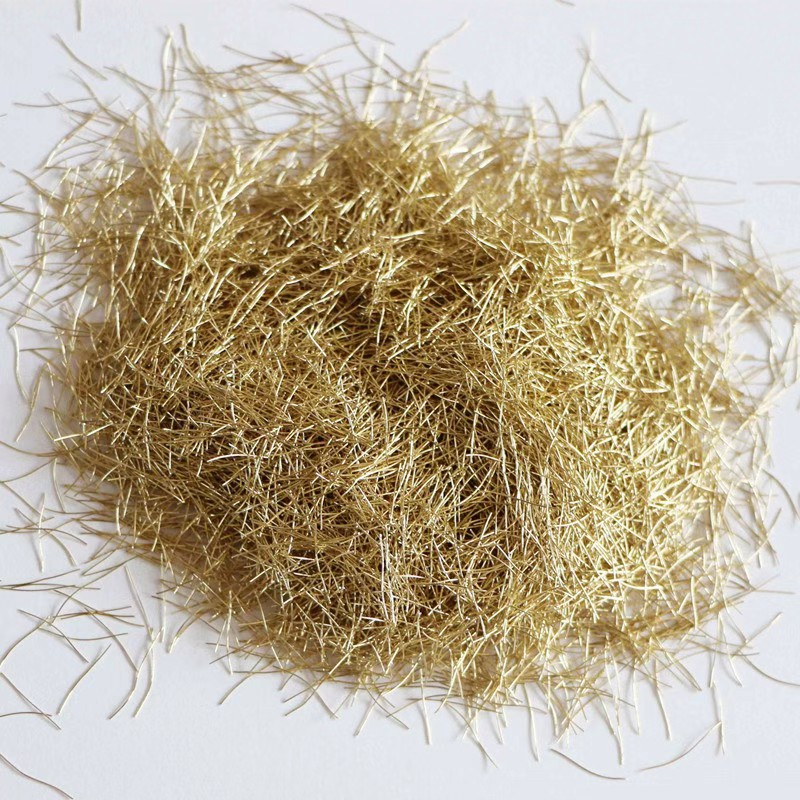
When enhanced with copper-coated micro steel fibers, this technology delivers even greater corrosion protection and superior bonding to the cement matrix—making it ideal for harsh environments and high-performance applications. This comprehensive guide explores the key international standards governing MSFRC, the advantages of copper-coated variants, and practical steps for successful implementation.
The micro steel fiber typically features diameters of 0.1–0.3 mm and lengths up to 30 mm, with high aspect ratios that enable uniform distribution. Unlike macro fibers (larger diameters for structural reinforcement), micro fibers excel at controlling early-age shrinkage cracks, enhancing ductility, and boosting fatigue and impact resistance. The addition of a thin copper coating further elevates performance by providing excellent corrosion resistance—crucial in chloride-rich settings like marine structures, bridges, or industrial floors—while promoting stronger interfacial bonding for improved load transfer after cracking.
No single standard exclusively covers micro steel fibre reinforced concrete, but a robust framework of international, European, and American specifications ensures quality, testing consistency, and safe application. These standards define fiber properties, testing protocols, and design principles.
ISO 13270:2013 outlines terminology, dimensions, tolerances, and mechanical/geometrical requirements for steel fibers, explicitly including micro types.
ISO 23407:2020 provides a standardized bending test to determine the load-crack opening curve, helping characterize post-cracking behavior essential for performance evaluation.
EN 14889-1:2006 specifies definitions, classifications, performance requirements (including durability), and conformity criteria for steel fibers in concrete, covering micro steel fibers comprehensively.
EN 14651:2005 + A1:2007 details the flexural tensile strength test using notched beams to measure residual post-cracking strengths, a cornerstone for design and specification.
Eurocode 2 (EN 1992-1-1) offers design guidelines for fiber-reinforced concrete, with national annexes often providing MSFRC-specific provisions.
ASTM A820/A820M-16 sets minimum requirements for steel fibers, including classification by type, tensile strength, and dimensional tolerances.
ASTM C1609/C1609M-19 evaluates flexural performance via third-point loading on beams, quantifying post-crack toughness and residual strength.
ASTM C1399/C1399M-10 (reapproved 2019) measures average residual strength after the first crack, complementing other tests for a comprehensive assessment.
ASTM C1116/C1116M also applies broadly to fiber-reinforced concrete and shotcrete.
RILEM TC 162-TDF delivers influential test and design methods for steel fiber reinforced concrete, frequently cited in research and project specifications. National standards (e.g., JIS in Japan, GB/T in China, AS in Australia) generally harmonize with these core ISO, EN, and ASTM frameworks.
These standards focus on critical parameters: fiber tensile strength (>2,000–2,500 MPa typical for micro types), aspect ratio, shape (straight, hooked, or deformed), dosage (often 10–40 kg/m³), dispersion uniformity, and performance metrics like residual flexural strength, toughness indices, crack width control, and durability under freeze-thaw, abrasion, or chemical exposure.
Copper-coated micro steel fibers combine the inherent strength of high-carbon steel with a protective copper layer, offering distinct advantages:
Superior Corrosion Resistance: The coating shields against oxidation, chlorides, and aggressive chemicals, extending service life in marine, wastewater, or de-icing salt environments.
Enhanced Bonding and Toughness: Improved adhesion to the cement paste creates a robust three-dimensional reinforcement network, increasing energy absorption, impact resistance, and post-crack ductility.
Crack Control and Durability: Excellent at mitigating plastic shrinkage cracks, reducing micro-cracking, and improving fatigue performance under cyclic loads.
No Need for Secondary Reinforcement: In many cases, they partially or fully replace traditional wire mesh, simplifying construction and reducing labor costs.
High Tensile Strength: Often exceeding 2,500–2,850 MPa, delivering exceptional reinforcement even at moderate dosages.
These fibers shine in scenarios requiring enhanced micro-crack control and long-term resilience:
Industrial and warehouse floors are subjected to heavy traffic and abrasion.
Bridge decks and highway pavements/overlays exposed to de-icing salts.
Shotcrete for tunnel linings, slope stabilization, and swimming pools.
Precast elements demanding high durability and reduced cracking.
Blast-resistant or impact-heavy structures.
Refractory linings and specialized high-performance concretes like UHPC.
Successful integration requires attention to mix design, mixing, and placement:
Determine Dosage: Start with project-specific needs (typically 10–40 kg/m³ for crack control; higher for enhanced toughness). Consult manufacturer data and conduct trial mixes.
Mixing Sequence: Add fibers gradually after aggregates but before or with cement to ensure uniform dispersion. Use high-shear mixers for best results—avoid clumping by incorporating slowly while mixing.
Workability Adjustments: Fibers may slightly reduce slump; compensate with superplasticizers or adjusted water content. Copper coating aids dispersion compared to uncoated fibers.
Placement and Finishing: Pumpable at recommended dosages; monitor for balling in high-volume additions. Standard finishing techniques apply, with fibers enhancing surface durability.
Testing and Quality Control: Verify performance using standards like ASTM C1609 or EN 14651. Ensure batch consistency and fiber orientation in hardened concrete.
Safety and Handling: Follow supplier guidelines for storage (dry conditions) and PPE during handling to prevent inhalation of fine particles.
Micro steel fibre reinforced concrete, especially with copper-coated variants, represents a smart, future-proof choice for demanding applications. By adhering to established international standards and following best practices, you can achieve superior crack resistance, durability, and structural performance while potentially reducing overall reinforcement costs.
Partner with reputable suppliers offering certified products backed by test data compliant with ISO, EN, and ASTM requirements. Whether for industrial slabs, infrastructure, or innovative precast designs, the right micro steel fiber solution delivers lasting value. Ready to reinforce smarter? Explore copper-coated micro steel fibers today and build structures that stand the test of time.